

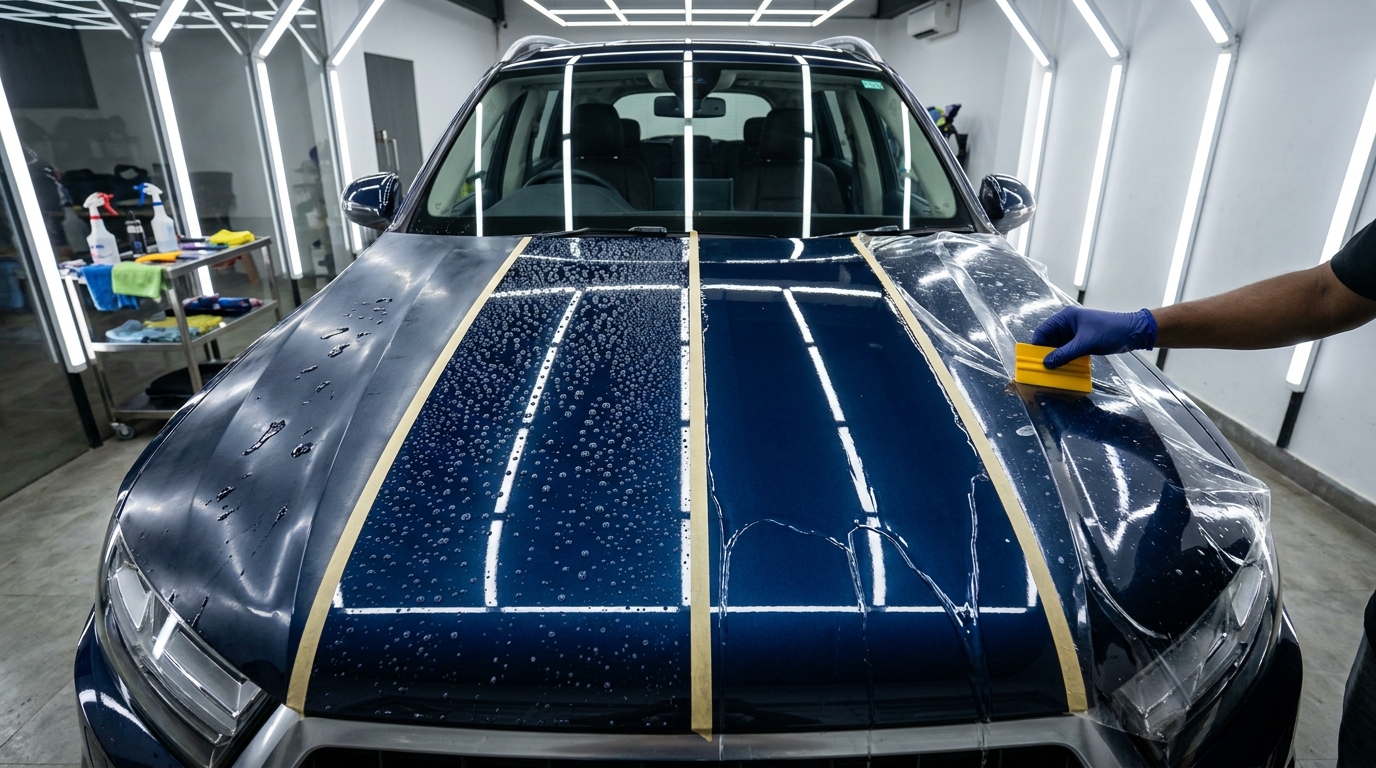
For a new car, PPF is the only option that physically stops stone chips and scratches; ceramic and graphene coatings add gloss and make the paint far easier to keep clean; Teflon coating is the lightest, shortest-lived layer of shine. Which one is right depends on how you drive, where you park and how long you plan to keep the car, and many owners end up combining PPF with a coating on top.
At Detailing Shoppe in Sector 5, Noida, we apply all four, so we have no reason to push one over another. This guide explains what each one actually is, what it can and cannot do on Indian roads, and how to choose for a car that has just come out of the showroom.
What Each Option Actually Is
Teflon coating
Teflon coating for a car is a polymer sealant, usually PTFE-based, that is polished onto the paint to add slickness and shine. It sits on top of the clear coat as a thin, soft layer. It makes water bead and dust wipe off more easily for a while, but it wears away with washing, sun and rain, so it needs repeating far more often than any other option here. Think of it as a quick, affordable refresh rather than long-term protection.
Ceramic coating
Ceramic coating is a liquid silica-based (SiO2) formula that bonds with the clear coat and cures into a hard, glassy layer. It gives deep gloss, strong water beading and resistance to bird droppings, tree sap and road grime, and it makes every wash quicker. It does not stop stone chips, dents or deep scratches. It is a chemical shield, not a physical one.
Graphene coating
Graphene coating for a car is a ceramic-type coating reinforced with graphene. Manufacturers position it as more slippery and less prone to water spotting than a standard ceramic, which matters in Noida, where hard water and dust are everyday problems. In practice it belongs in the same family as ceramic: excellent for gloss and easy cleaning, and still not a barrier against impacts.
Paint protection film (PPF)
PPF is a clear, flexible urethane film applied panel by panel over the paint. It is the only option here that takes the hit itself: stone chips on the Noida–Greater Noida Expressway, key scratches, gravel from construction zones and parking-lot scuffs land on the film instead of your paint. Good PPF also has a self-healing top layer that relaxes light swirl marks with heat.
Teflon vs Ceramic vs Graphene vs PPF: Side-by-Side
| Teflon | Ceramic | Graphene | PPF | |
|---|---|---|---|---|
| What it is | Polymer (PTFE) sealant | Silica-based hard coating | Ceramic reinforced with graphene | Clear urethane film |
| Stops stone chips? | No | No | No | Yes |
| How long it lasts | Shortest; needs frequent reapplication | Long-lasting | Long-lasting | Longest |
| Gloss and water beading | Good, fades quickly | Very good | Very good, less water spotting | Good; best with a coating on top |
| Upkeep | Reapply regularly | Gentle washing | Gentle washing | Gentle washing; avoid harsh chemicals on edges |
| Warranty at Detailing Shoppe | — | 1, 3 or 5-year plans | 1, 3 or 5-year plans | 5 years, e-warranty |
| Starting price at Detailing Shoppe | From Rs 6,500 (3M) | From Rs 7,200 (1-year) · Rs 11,000 (3-year) · Rs 15,000 (5-year) (3M) | From Rs 15,000 (1-year) · Rs 18,000 (3-year) · Rs 21,000 (5-year) (3M) | From Rs 30,000 |
All prices are starting prices for the smallest cars. The final figure depends on the size of the car, its paint condition and, for PPF, how much of the car you cover.
Teflon vs Ceramic Coating: Which Is Better?
If you are comparing Teflon vs ceramic coating, the honest answer is that ceramic is better on almost every measure except upfront price. Teflon is a soft layer that washes away; ceramic cures into a hard layer that stays bonded to the paint for much longer and resists chemical stains better. Teflon costs less on the day, but because it has to be redone again and again, it rarely works out cheaper over the life of a car.
Teflon still has a place. It suits an older car you want to freshen up before selling, a vehicle you do not plan to keep for long, or someone who wants to see what a protected finish feels like before committing to more.
Graphene vs Ceramic Coating: Is Graphene Worth the Extra?
Graphene vs ceramic coating is a closer contest. Both give a glassy, slick finish and both make washing easier. Graphene is positioned as the more slippery, lower-water-spotting version, which can help if your car stands outdoors or gets washed with borewell water. If your car is parked in a covered spot and washed carefully, a good ceramic coating already delivers most of that benefit. We would call graphene an upgrade in finish and ease of cleaning, not a different category of protection. Neither one stops a stone chip.
Which One Should You Choose for a New Car?
You drive on highways or park on the street
Go for PPF, at least on the front end: bonnet, bumper, headlamps and mirrors take most of the stone chips. A new car’s factory paint is the best it will ever be, and film keeps it that way. Many owners add a ceramic or graphene coating on top of the film for easier washing.
You mostly drive in the city and have covered parking
A ceramic or graphene coating gives excellent gloss and makes dust, bird droppings and monsoon grime easy to deal with. Choose graphene if water spotting bothers you; choose ceramic if you want the best value per rupee.
You want the best possible protection and plan to keep the car for years
Full-body PPF with a coating on top. The film protects against physical damage; the coating keeps the film glossy and easy to clean. This is the most complete option and also the most expensive. If you choose a coating alone, pick a 3- or 5-year ceramic or graphene plan: both include a free yearly maintenance coating, which keeps the finish at its best for as long as you own the car.
You are on a tight budget or will sell the car soon
Teflon coating gives an immediate improvement in shine for the least money. Just plan to reapply it, and do not expect it to protect against anything more than light everyday dirt.
How Soon After Delivery Should You Do It?
As soon as you reasonably can. Paint protection works best on paint that has not yet picked up swirl marks from roadside washing or chips from daily driving. With PPF in particular, any existing mark gets sealed under the film, so starting with fresh paint gives the cleanest result. Even brand-new cars often arrive with transport dust, light marring from the dealer’s wash or small defects, which is why every job starts with proper preparation.
Whatever You Choose, Preparation Decides the Result
Two studios can use the same product and deliver very different results. Most of the work in any coating or PPF job happens before the product goes on: a thorough wash, decontamination to remove iron particles and tar, and paint correction to take out swirls and light scratches. A coating locks in whatever is underneath it, flaws included. When you compare quotes, ask what preparation is included, not just which product is used.
PPF Brands and Warranty at Detailing Shoppe
We install PPF from Supreme, LLumar, Garware and Saint-Gobain, so you can compare films side by side instead of being steered towards a single brand. Every PPF brand we install issues an e-warranty in the customer’s name, and our PPF comes with a 5-year warranty. If a defect ever appears, we photograph and video it, send it to the brand’s technical team for approval, and replace the film on the affected panel.
Our Teflon, ceramic and graphene coatings are from 3M, and Detailing Shoppe is a 3M accredited installer. Ceramic and graphene are sold as 1, 3 or 5-year plans: ceramic starts from Rs 7,200 for the 1 year plan, and graphene from Rs 15,000 for the 1 year plan.
Frequently Asked Questions
Is Teflon coating worth it for a new car?
Only as a short-term option. Teflon coating adds shine and makes the car easier to wipe down, but it wears off much faster than ceramic or graphene and gives no protection against chips or scratches. For a new car you plan to keep, a ceramic coating or PPF is better value over time.
Teflon vs ceramic coating: which lasts longer?
Ceramic, by a wide margin. It bonds with the clear coat and cures into a hard layer, while Teflon is a softer sealant that washes away with time. At Detailing Shoppe, ceramic coating comes as a 1, 3 or 5-year plan, starting from Rs 7,200 for the 1 year plan.
Is graphene coating better than ceramic coating?
Graphene is a refined version of ceramic that is positioned as slicker and less prone to water spotting. It is a worthwhile upgrade if your car stands outdoors or you struggle with water marks, but it offers the same type of protection as ceramic, not more impact resistance.
Can I put a ceramic or graphene coating over PPF?
Yes, and many owners do. The film protects the paint from physical damage, and the coating on top keeps the film glossy, hydrophobic and easy to wash.
Which option actually protects against stone chips?
Only PPF. Teflon, ceramic and graphene coatings are chemical layers that improve gloss and cleaning; they cannot absorb an impact. If stone chips are your main worry, PPF is the answer.
Talk to Us Before You Decide
Bring your car to Detailing Shoppe at B-53 B Block, Sector 5, Noida, or WhatsApp us on +91 999 191 9148. We will look at the paint, ask how you use the car and recommend the option that fits, whether that is Teflon, ceramic, graphene, PPF or a combination.